
Overview
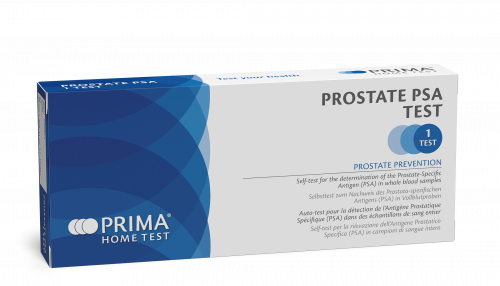
Prima Home Test Prostate PSA Test
Self-test for the determination of the Prostate-Specific Antigen (PSA) in whole blood samples
PROSTATE-SPECIFIC ANTIGEN (PSA):
Prostate
Specific Antigen (PSA) is a protein produced by the cells of the
epithelium of the prostate gland with the task of thinning the
ejaculate, allowing better sperm motility.
This protein also plays a
role in the dissolution of cervical mucus, facilitating the entry of
sperm into the uterus. Normally, PSA is present in men’s blood with a
healthy prostate in small quantities. In the presence of prostate
diseases (such as prostatitis, benign prostatic hyperplasia and cancer)
PSA levels in blood increase. PSA levels undergo a physiological
increase with advancing age or after prostate surgery and as a
consequence of specific diagnostic tests.
WHO IS THIS TEST FOR?
PROSTATE PSA TEST is indicated for men with urinary symptoms or as a periodic screening over 45 years of age.
Among
the most common symptoms related to a possible prostatic pathology
there are: difficulty in urination, pain and increased frequency.
Periodically checking the PSA level in the blood is useful for verifying
the health of the prostate: in the event of possible prostate cancer,
early diagnosis and proper prevention can save lives.
TECH SPECS:
PROSTATE PSA TEST is an immunochromatographic device that detects PSA values above the cut-off of 4 ng/mL.
Specificity 87.13%
Sensitivity 97.22%
Accuracy 92.34%
CONTENT:
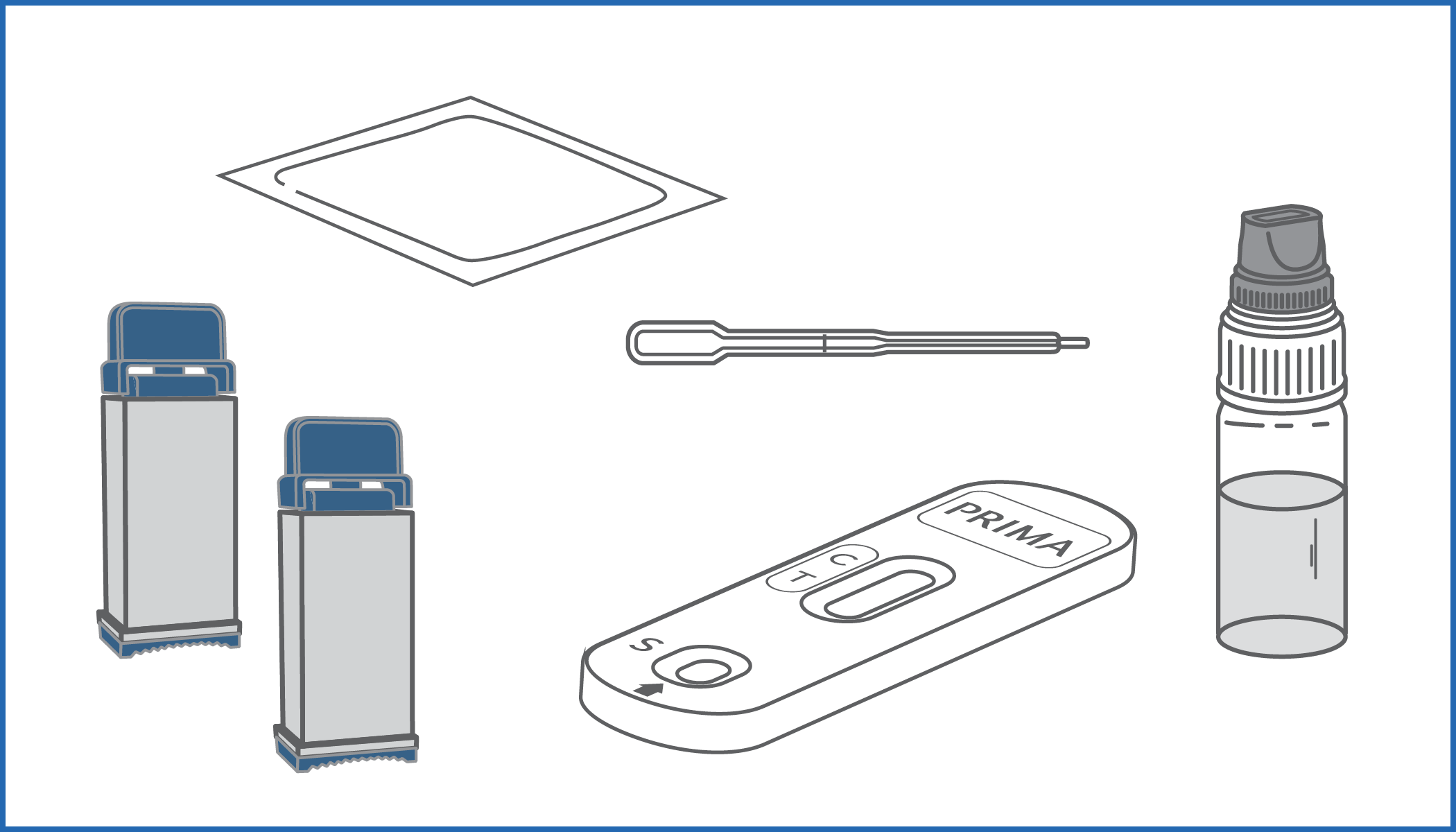
1 test cassette
1 vial with dropper containing the diluent
2 sterile lancets
1 pipette for blood sampling
1 cleanser gauze
instructions for use
USE PROCEDURE:
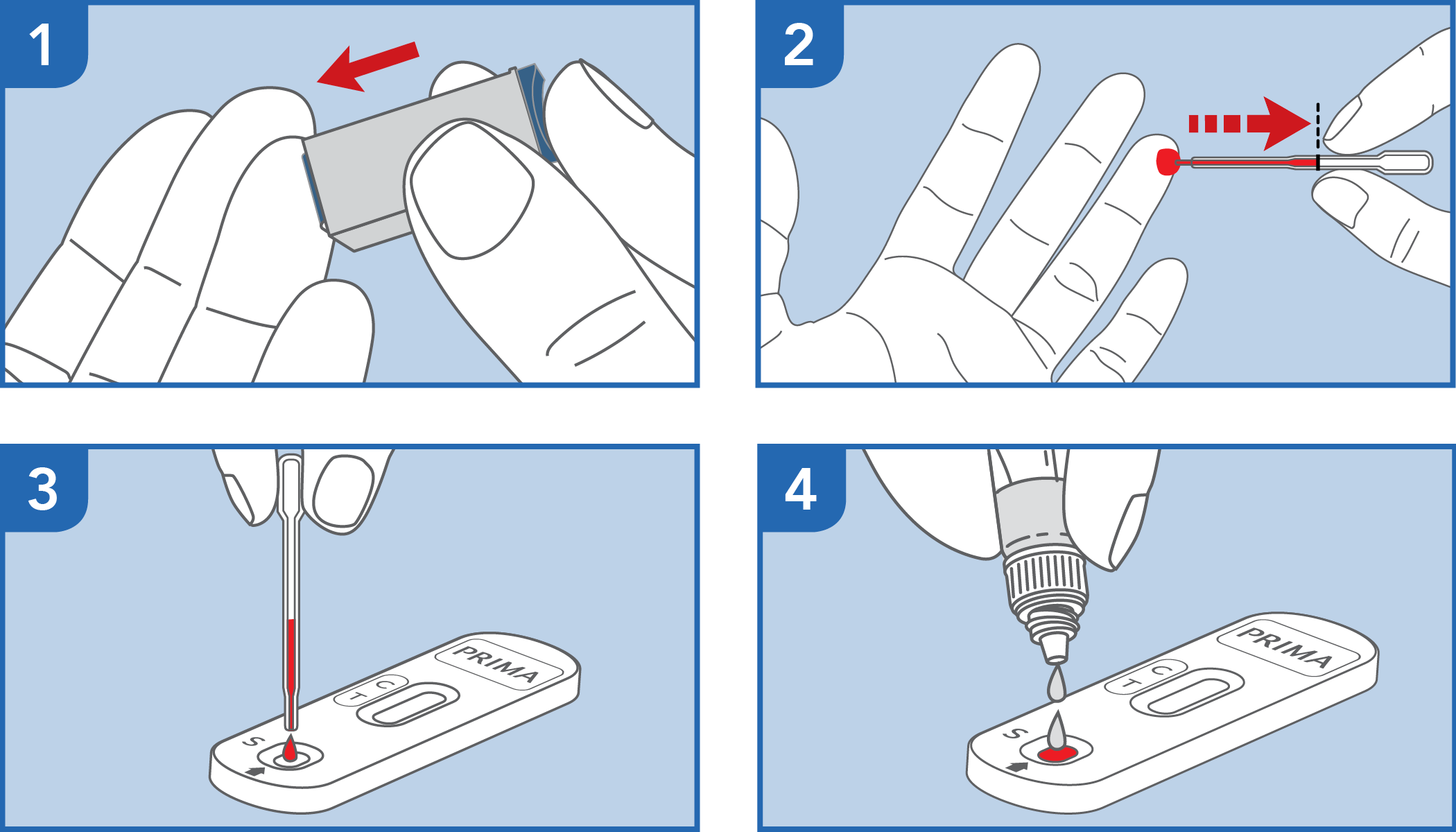
1.Draw a blood sample by using the sterile lancet provided;
2.Collect the sample indicated with the black line by using the capillary pipette provided;
3.Deposit the collected specimen into the sample well (S) indicated on the test cassette;
4.Add 2 drops of the diluent and wait 5 minutes before reading the result.
RESULTS INTERPRETATION:
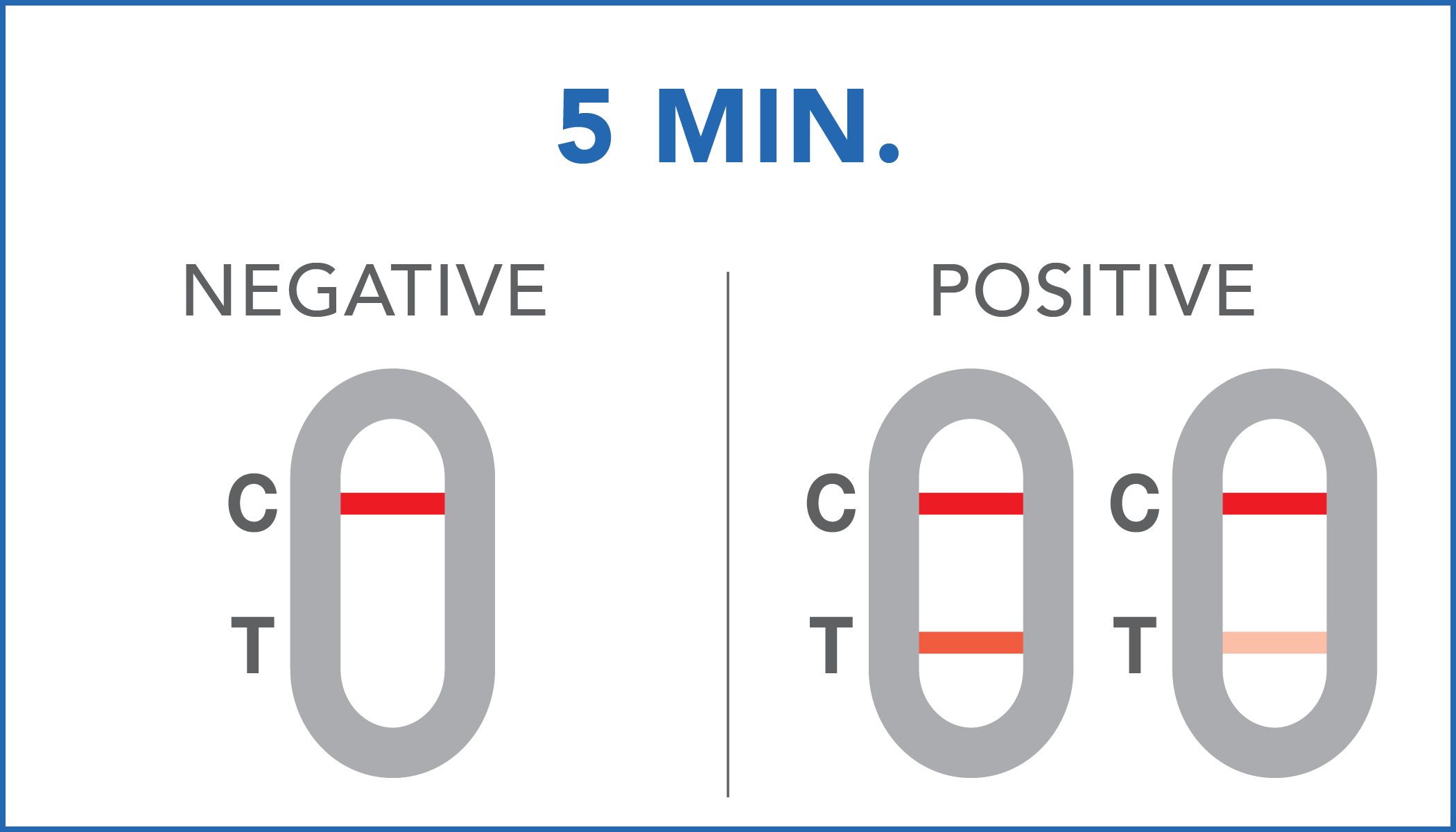
Negative – the PSA value obtained is within the norm.
Positive – the PSA value found is higher than the normal threshold, it is necessary to consult a specialist.
BIBLIOGRAPHY:
1.
Catalona W.J., Southwick P.C., Slawin K.M., Partin A.W., Brawer M.K.,
Flanigan R.C., Patel A., Richie J.P., Walsh P.C., Scardino P.T., Lange
P.H., Gasior G.H., Loveland K.G., Bray K.R.: Comparison of percent free
PSA, PSA density, and age-specific PSA cutoffs for prostate cancer
detection and staging.
Urology. 2000 Aug 1;56(2):255-60.
2.
Fritsche H.A., Babaian R.J.: Analytical performance goals for measuring
prostate specific antigen. Clin Chem. 1993 Jul;39(7):1525-29.
3.
Michael J. Barry, M.D: Prostate-Specific–Antigen Testing for Early
Diagnosis of Prostate Cancer. The New England Journal of Medicine, 2001;
344:1373-1377.
F.A.Q.:
What happens if the results reading time is not met?
The
test has been carried out correctly when the instructions for use are
followed. It includes the reading time and the interpretation of the
results shown at the “RESULTS INTERPRETATION” section of the
instructions for use.
How to prove that the test worked correctly?
A
colored line will appear at the control region (C) on the test device,
showing that the test performed correctly. The absence of the colored
line suggests to repeat the test with a new device and a new sample.
How to interpret the test if the control and test lines have different intensities?
The
color and intensity of the lines do not affect the interpretation of
the result. The test has to be considered positive regardless of the
color intensity of the test line (T).






Reviews
There are no reviews yet.